The Journal

All essays.

Notes on sovereignty, craft, living abroad, and the work of building something honest and entirely your own.

Abroad

I thought I'd be a millionaire by my 50th birthday.

I thought I'd be a millionaire by my 50th birthday.

And well as of today… age 50 cometh in t-minus 2 months and 3 days.

I mean miracles do happen but uhhhh… I'm not a millionaire as of today.

This pic from last year was a nod to the 90's… and being too legit to quit. 🎶

I was living in Playa del Carmen, Mexico on my last birthday.

And if I'm honest. My birthday was lonely. I had created space from a lot of people and didn't have new friends. Just a few random acquaintances.

I hadn't danced with a man or wore heels and a skirt the whole time I was there. Human contact was important and I didn't have much.

That was a sobering pain I didn't love at all.

But I kept my chin up… even while no one would have blamed me for falling apart.

It was a peaceful birthday none-the-less. Being alone, deepened my relationship with mySelf, and that was priceless.

This year… maybe I'll pick a new theme over being too legit to quit…

I would like some fun and frivolity with good people to celebrate this milestone.

And if I become a millionaire in t-minus 2 months… I'll letcha know. 👀

Reckoning

What she built… and what she was building against.

It's the question no one asks her.

It's not… "What have you accomplished"… she can answer that in her sleep, and she will, brilliantly, if given the chance.

The question is "What have you built, and what were you building against?"

That question gets to the heart of the fear that was underneath what she was building. The verdict she was running from.

The question was not to make the achievement(s) wrong in any way. It was to get beneath the engine to see what she was protecting herself from when she built it. What she actually wanted, beneath the protection.

Achievement is not the problem. Unconscious achievement… building without knowing what you're building toward or away from… is where the cost hides.

The conversation isn't about dismantling what you built necessarily, but about choosing what to build next (or to shift what you've been building) from a different place.

Listen in to an honest conversation with Diane about what she built, what she was protecting herself from, and how she built differently.

An honest conversation with Diane, 52. Former managing partner. Current work in progress.

Diane, tell me what you built.

I built a consulting practice that became a firm. Eighteen years. At peak we had twenty-two people and clients in four countries. I built a reputation as someone you called when the situation was genuinely difficult… the turnaround, the crisis, the thing nobody else wanted to touch.

I built a marriage, two kids who are mostly okay, a house that is beautiful and that I chose partly because of what it said about where I'd arrived. I built financial independence. Real independence… the kind where you stop checking the account every morning.

That's the version I could give you in my sleep.

And what were you building it against?

(she pauses)

My father left when I was nine. Not dramatically. He just became someone who lived somewhere else and called on birthdays. My mother worked constantly and was competent and exhausted and I understood, even then, that her exhaustion was partly because she was doing everything alone and doing it well and nobody was particularly noticing.

I decided somewhere around eleven or twelve that I was never going to need anyone the way she needed him. That I was going to be so capable, so genuinely excellent at whatever I did, that the question of whether someone was going to stay or go would simply become irrelevant. Because I wouldn't need them to stay.

That was the engine.

Everything I built… at the foundation of all of it, was an eleven year old girl who decided that need was dangerous and competence was the antidote.

I didn't know that for a long time. I thought I was ambitious. I am ambitious. But ambition was also the cover story.

So, what did you actually want? Underneath the protection?

To be chosen. Not because I was useful or impressive or because walking away from me would have been professionally costly. Just chosen. For no strategic reason. Because I was worth staying for.

I wanted someone to see the whole of me… the capability and the scared kid underneath the capability… and stay anyway. Not be managed by me into staying. Just stay.

I wanted to build something genuinely mine. Not mine as in I own it. Mine as in it came from something true rather than something frightened.

I don't think I fully knew the difference until the firm went through a significant contraction three years ago. We lost our two largest clients within six months of each other. I remember sitting in my office after the second call and waiting to feel the thing I expected to feel… the strategic response, the plan, the pivot.

What I felt instead was relief. Which terrified me more than the loss did.

What did that relief tell you?

That I had been building something I was also trapped inside of. That the thing I constructed to protect myself had become its own kind of cage. Not a bad cage… a gilded one, genuinely impressive, genuinely mine.

But I had organized my entire life around proving something to a man who wasn't even watching and protecting myself from a loss that had already happened thirty years ago.

The relief was the part of me that had been waiting for permission to stop.

And what are you building now?

Something smaller. Which was hard to say for a long time because smaller felt like losing.

I kept four clients. The ones where the work actually matters to me and where I think I genuinely matter to them. I let the rest go with genuine care, good referrals and a lot of private grief about what it meant to choose less.

I started writing. Not thought leadership… I did that for years and it was fine. Something more honest than that. About what it actually costs to build the way I built.

I rebuilt the marriage. Which required me to finally tell my husband what I had actually needed for eighteen years… a conversation I had been avoiding because having it required admitting I had needs at all.

That conversation was the hardest thing I did in a year that included significant professional loss.

We're better now than we have ever been. Not because the conversation fixed everything. Because it was the first time I showed up without trying to manage everything.

And I'm building something new… smaller, more specific, more genuinely mine… from a question I've never built from before.

Not: what can I construct that will make me safe. But: what do I actually want to make?

I don't have the full answer yet. But for the first time in my adult life I'm building toward something rather than away from something.

That difference… I can feel it in my body when I work now. More mine. More like something that will actually last.

Recognize yourself in Diane? In the engine underneath the building? In the relief you weren't expecting? In the question you haven't let yourself ask yet… this is the work we do together.


Sovereignty

The fee you're afraid to name.

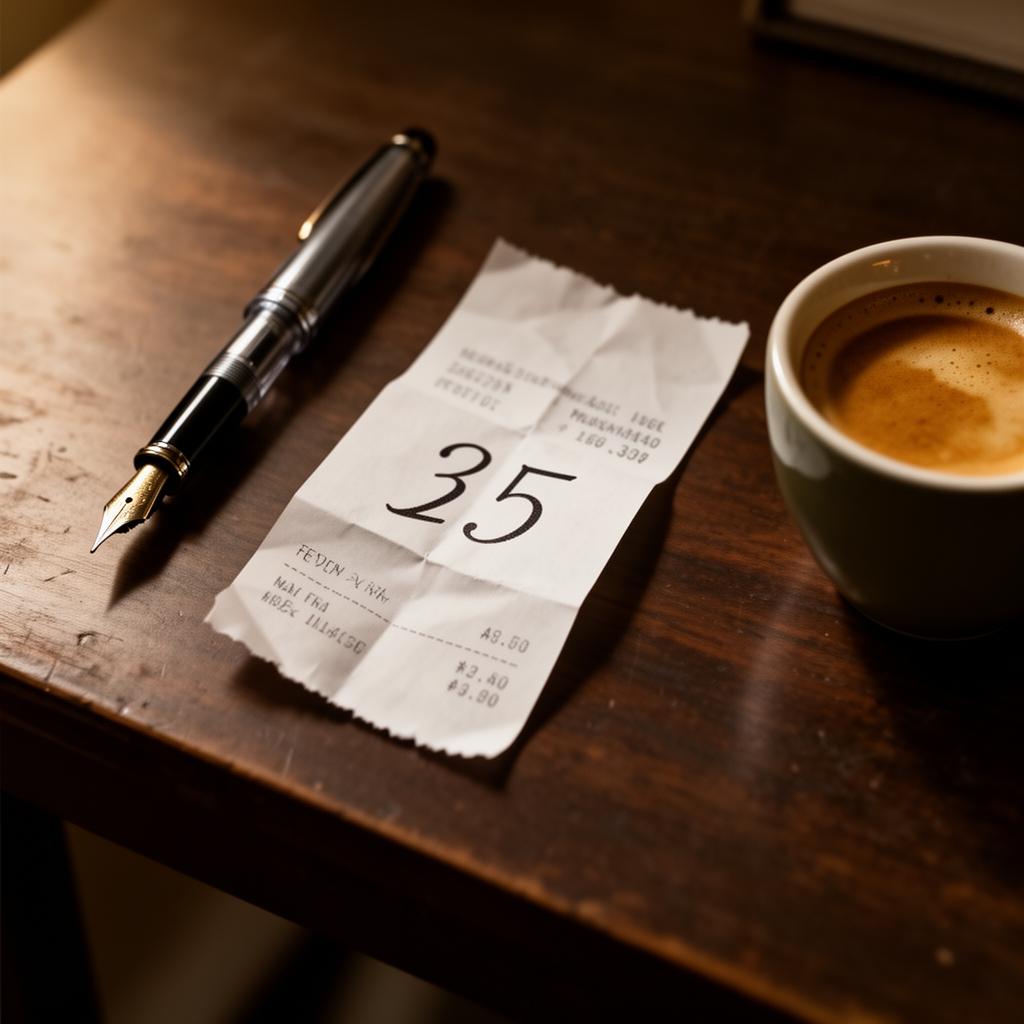
There is a number you have not said out loud yet. You have circled it in your notes app. You have written it on the back of a receipt and then turned the receipt over. You have whispered it to one friend at dinner and watched her face to see if it was too much.

It is not too much. It is the fee you are afraid to name.

For most of us, pricing is not a math problem. It is a nervous system event. We were taught, early and often, that to ask for the real number is to be ungrateful, greedy, difficult, unfeminine, un-spiritual, un-Black-girl-humble, un-something. So we discount before anyone asks. We round down on the proposal. We throw in the extra call. We tell ourselves we are being generous. We are being afraid.

Here is what I have learned, in my own work and in the work of the women I coach. The fee you are afraid to name is almost always the correct one. Not because higher is always better, but because the fear is information. The fear is your body recognizing that this number would require you to stand fully in your authority, to be seen at your real size, to lose the people who only stayed because you were cheap.

Naming it is a spiritual practice. You say the number. You do not apologize after it. You do not soften it with a discount on the next breath. You let the silence happen.

The right people will say yes faster than you think. The wrong ones will quietly leave. Both are a gift.

Abroad

Almost a year abroad in Mexico and Guatemala City.

I did not leave the United States to find myself. I have been with myself my whole life. I left to stop performing the version of me that country required.

The first month in Mexico, I slept differently. I did not realize how much of my body had been braced until it stopped bracing. I would wake up and lie there for a long time, listening to a city that was not asking me to prove anything before breakfast.

Guatemala City taught me something else. It taught me what it feels like to be a stranger who is still treated like a person. To buy fruit from the same woman three weeks in a row and have her remember my name before I remembered hers. To be the only Black woman in a room and not have it be the loudest fact in the room.

I learned that a lot of what I thought was my personality was actually my posture. The over-explaining. The pre-apologizing. The reflex to make myself smaller in elevators. None of that traveled with me. I left it at the gate and it did not follow.

I learned that I am funnier than I remembered. Softer. Slower to anger and quicker to laugh. I learned that I do not need permission to rest, but I do need a country that does not punish me for it.

I am not anti-anywhere. I am pro the version of myself that gets to exist when no one is watching her to see if she is going to be too much. She is the one writing this. She is the one running the practice now.

Craft

Build a body of work, not a brand.

A body of work is a deliberate act. It is choosing, on purpose, the questions you want to be in conversation with for the next ten years. It is publishing the thinking even when the thinking is not finished. It is keeping receipts of your own genius in a place you control.

The portfolio is the only marketing that compounds. The essay you wrote in 2024 is still earning you clients in 2027. The framework you named is still being quoted by people you have never met. The brand refresh, on its own, is not.

Make the thing. Name the thing. Put the thing somewhere it can be found. Do that a hundred times. That is a body of work. That is what travels with you. That is what they cannot take back when the algorithm changes.

Craft

The thing you cannot see about yourself is usually the thing worth selling.

You keep trying to sell the thing you worked hardest for. The credential. The framework. The system you stayed up building. That is the part you can see, so that is the part you point at.

But the thing people actually come to you for is usually the thing you do without noticing. The way you can hear what someone is not saying. The way you can hold a hard truth without making the person holding it feel small. The way a room settles when you start asking questions.

You cannot see it because it does not cost you anything. It is not effort. It is orientation. And we have been trained to only price effort.

Here is the test. Think about the last three times someone said "how did you know that" or "I have never had anyone explain it that way." Whatever you did in those moments, you probably did not plan. That is the thing.

It feels wrong to charge for it. It feels like charging for breathing. That feeling is not a signal that it is worthless. It is a signal that it is native.

The work is to name it. Not to manufacture something more impressive on top of it, but to say the plain thing out loud: this is what I do, this is what happens when I do it, this is what it costs.

Ask three people who have worked with you what changed for them. Do not lead them. Write down the words they use, not the words you wish they used. Somewhere in that list is your actual offer.

You do not need a bigger thing. You need a clearer one.

Discernment

Success leaves clues. So do survival patterns. Here's the difference.

Both of them look like discipline from the outside. Both of them produce results. That is why they are so easy to confuse, and why so many capable women spend a decade optimizing a pattern that was never ambition in the first place.

A success pattern is repeatable on purpose. You can name what you did, you can teach it, and you can choose not to do it without your whole nervous system going on alert.

A survival pattern is repeatable too. But it runs whether or not you choose it. It has a tone underneath it. Urgency. A quiet certainty that if you stop, something will be taken.

The test is not the outcome. Both patterns produce outcomes. The test is what happens when you try to stop.

If you can put it down for a week and feel rest, it was a strategy. If you put it down and feel exposed, it was armor.

Another clue: success patterns get more specific over time. You do less, better. Survival patterns get broader. You add. You take the extra client. You say yes to the thing you do not want because the possibility of no feels expensive.

One more: success patterns can be explained without a story about the past. Survival patterns always have a because underneath them, and the because is usually older than the business.

None of this means the survival pattern was wrong. It got you here. It was intelligent, it was protective, and it worked. But a pattern built to keep you safe will not build the thing you actually want, because it was never designed to want. It was designed to prevent.

So take an inventory. Write down the five things you do consistently in your business. Beside each one, write what you believe would happen if you stopped. The ones with a catastrophe attached are the ones to look at.

You do not have to dismantle any of it today. You just have to know which engine you are running on.

Sovereignty

Build the business. Don't build another identity prison.

The first prison was the job. The title, the org chart, the version of you that had to show up on Monday. You left it, and you were right to.

The second one is harder to see, because you built it yourself and you decorated it beautifully.

It starts innocently. You pick a niche, and the niche becomes a personality. You get known for something, and being known for it starts to require you. The audience learns your positions and you begin to hold them longer than you believe them.

One day you have a thought that contradicts your brand and you notice yourself deciding not to say it. That is the door closing.

A business should be a thing you run. Not a thing you are. The moment your work becomes your identity, every business decision becomes an existential one, and existential decisions cannot be made cleanly. You will keep an offer alive past its usefulness because letting it go feels like a small death.

The way out is not reinvention. It is separation. Your work is a set of things you make and sell. You are a person who makes them. Those are two different objects, and you are allowed to change one without losing the other.

Practically: keep something in your life that has no strategic use. Something you are not good at and will never monetize. It sounds soft. It is structural. It is the proof that you exist outside the thing.

And build offers you can end. Write the sunset into the design. An offer you cannot retire is not an asset, it is a hostage situation with better branding.

You did not leave one cage to build a nicer one.

Reckoning

The permission you are still waiting for.

There is a version of your next move that you have already fully designed. You know the price. You know the format. You know who it is for. You have known for months.

You are not stuck. You are waiting.

Waiting for a person, usually. Someone with the standing to say yes, that is allowed, you have thought about this enough, go.

The trouble is that the people you are waiting on have no idea they were assigned the job. And even if they said it, you would not believe them, because the thing you are waiting for is not information. It is release from responsibility. If someone else says go, then it is not entirely your fault if it fails.

That is the actual transaction underneath permission. Shared blame.

Sovereignty is expensive for exactly this reason. It means the decision is yours, the timing is yours, and if it goes badly, the accounting is yours too. Nobody is coming to co-sign.

What helps is smaller stakes, not more certainty. Do not wait until you feel ready to launch the whole thing. Do the smallest version that is real. Send the email to nine people. Run it once. Charge the number.

Certainty is not a prerequisite. It is a byproduct. It shows up after, and only for people who moved.

Name the thing you are waiting on. Write down the person whose approval you are quietly holding out for. Then ask whether you actually respect their judgment more than your own on this specific question. Usually you do not. Usually you just want company.

Reckoning

The difference between being chosen and being useful.

Useful is safer. Useful can be earned, measured, and repeated. If you are the one who solves the problem, you have a reason to be in the room, and reasons feel more reliable than affection.

So you become indispensable. And then you notice something strange: the more indispensable you become, the less sure you are that anyone would want you there if you stopped producing.

That is the cost of building your belonging out of usefulness. It has to be renewed constantly. There is no version of it that lets you rest.

Chosen is different, and it is harder to tolerate. Being chosen has no mechanism. You cannot work harder to secure it. It happens or it does not, and it is happening about a version of you that you did not curate.

Which is why so many capable women avoid it entirely, and call the avoidance ambition.

You see it in the business too. Clients who need you versus clients who want you. Contracts renewed out of dependency versus contracts renewed out of respect. The first kind pays. The second kind builds something.

The shift is not to stop being useful. Your competence is real and it is yours. The shift is to stop using usefulness as the only currency you will accept.

Try this: one relationship this month where you contribute nothing strategic. No value add. No fixing. Just presence. Notice how uncomfortable that is, and notice that they stay anyway.

Craft

How to know when your work has outgrown the story you told about it.

The story was accurate once. You wrote it when the work was young, and it did its job. It got you clients, it made you legible, it gave people a way to introduce you.

Then the work moved and the story did not.

The signs are quiet. You start feeling slightly bored describing what you do. You catch yourself adding a caveat: well, technically I do that, but really what I do is. Discovery calls take longer because you are translating. The clients who come from your positioning are not the clients you want, and the clients you want found you some other way.

That last one is the loudest signal. When your best work arrives through referral and side doors rather than through your own front page, your story has stopped pointing at your actual work.

There is grief in this. The story was a real achievement. Naming what you did was hard, and now the name does not fit, and the market knows you by it.

But holding a story past its life does not preserve anything. It just makes you harder to find.

The rewrite starts with evidence, not imagination. Look at your last ten engagements. What did people actually hire you for? Where did the value land, honestly, not aspirationally? What did you find yourself doing that was not in the proposal?

Write the new story from that. Not from where you want to be. From where the work already is.

Then update everything at once. A half migrated story is worse than an old one.

Reckoning

The quiet grief of becoming more yourself.

Nobody warns you about the loss. They talk about growth like it is only addition. More clarity, more alignment, more room. They do not mention that you will spend a season mourning a person who was you.

She was competent. She knew the rules. She had a whole apparatus that worked, and she built most of what you have.

And you are dismantling parts of her on purpose, which is a strange thing to do to someone who saved you.

There is also the loss of people. Not dramatically. Some relationships were organized around a dynamic, and when you change your side of the dynamic, the arrangement stops functioning. Nobody did anything wrong. It just ends.

And the loss of certainty. The old version had answers. The new version has better questions and fewer answers, and for a while that feels like regression rather than growth.

Let it be grief. Not a mindset problem. Not resistance to be pushed through. Something real was lost, and grief is the correct response to loss.

What I have found is that the grief is proportional to how well the old self served you. The women who mourn the hardest are usually the ones whose armor worked best.

It passes. Not by being resolved but by being outgrown, the same way the old self was. One day you will notice you have not thought about her in a while, and there will be a small pang, and then the rest of your day.

Discernment

The body knows before the business does.

There is a client you dread. You have not admitted it in those words, but your calendar knows. You move that call. You leave the email until the end of the day. Your jaw does something when their name appears.

The spreadsheet says the account is fine. Your body has been filing a report for months.

This is not mysticism. It is faster processing. The body registers pattern before language does, and it does not require you to be able to justify the conclusion before it commits to it.

The mistake is treating that signal as either infallible or irrelevant. It is neither. It is early data.

So use it like data. When your body says something, do not obey it and do not dismiss it. Investigate it. What specifically happens in that relationship? Where does the scope drift? What did you agree to that you should not have?

Almost always there is a concrete answer underneath the dread, and the concrete answer is fixable or it is a reason to end the arrangement. Either way you now have language, and language is what lets you make a clean decision instead of a resentful one.

Keep a simple log for a month. Note the moments your body reacted before your mind did. Then go back and see what turned out to be true. You are building evidence for your own instrument, and that evidence is what makes trusting yourself a practice rather than a hope.

Sovereignty

Building a life that does not need an audience.

Test it honestly. If nobody would ever know about a decision, would you still make it? The house, the trip, the offer, the retirement of the offer. Take away the possibility of anyone seeing it and check whether the wanting survives.

Some of it will not survive. That is useful information, not a moral failure.

Visibility is a legitimate business function. Being known is how people find you, and I am not going to pretend otherwise. The problem is when the audience stops being a channel and starts being a jury.

You can tell it has happened when you begin narrating your life while you live it. When a good moment arrives and part of you is already writing the caption. When rest requires a photograph to feel real.

The correction is not to disappear. It is to build a private layer that no one gets access to.

Something you make that will never be published. A practice nobody knows you keep. Rooms where you are not the expert. A version of the work you do only because it interests you.

That layer is what keeps your judgment yours. Without it, every instinct eventually gets routed through what will play, and what plays and what is true diverge more often than we admit.

The women I know who have lasted all have this. A whole territory of their lives that generates nothing, proves nothing, and belongs entirely to them.

Abroad

What I learned from a year of not explaining myself.

The first thing I noticed was how much of my speech had been pre-emptive. Not conversation. Defense. Explaining the reason before anyone asked for it, offering the context nobody requested, softening a plain sentence into a paragraph so it could not be taken the wrong way.

I did not decide to stop. I ran out of the language to keep doing it, and then I found out what the sentence sounds like without the scaffolding.

It sounds shorter. It sounds like a decision.

Here is what a year of that taught me. Most explaining is not clarity, it is negotiation. You are not helping someone understand. You are pre-paying for their approval so you do not have to sit in the gap between your choice and their reaction.

The gap is survivable. That was the whole lesson. People do not understand, and then the day continues.

It changed my pricing. A number stated once, without a paragraph after it, is a different number than the same figure buried in justification. Clients heard the difference before I did.

It changed my boundaries. No is a complete answer, and it turns out the people worth keeping never needed the essay.

It changed my writing. When you stop defending, you start saying the actual thing, and the actual thing is always shorter and always harder to argue with.

I still explain sometimes. Now it is a choice rather than a reflex, and I can usually tell which one I am doing while I am doing it.

That is the whole practice. Not silence. Just the pause long enough to ask whether this sentence is for them or for my own nerves.